
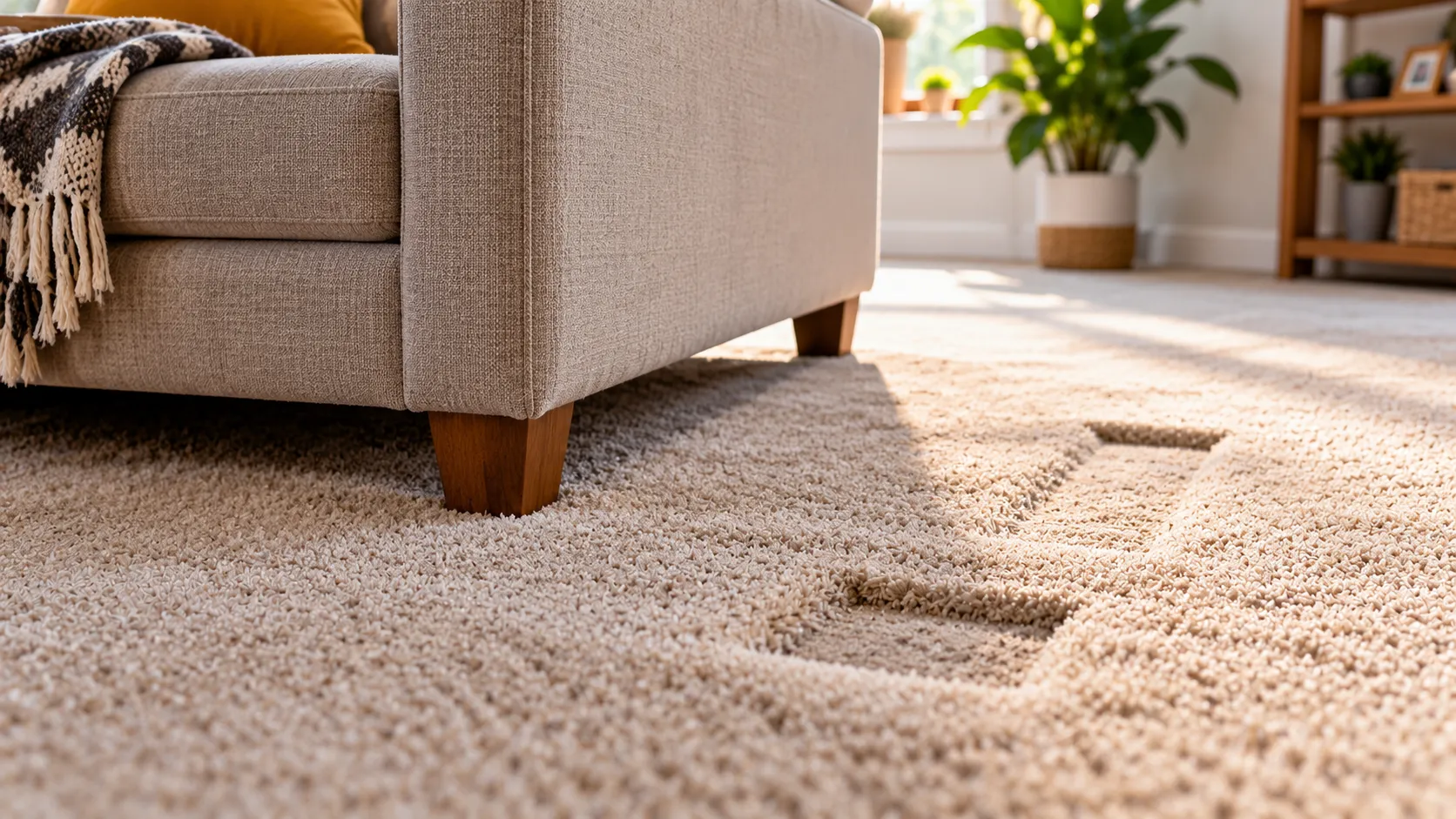
Have you ever moved your sofa, bed, or coffee table and noticed deep marks where the furniture used to stand? Even after cleaning your carpet, those dents may remain visible, making an otherwise clean room look uneven.
Furniture marks in carpet are a common concern for homeowners. Heavy furniture can compress carpet fibres over time, leaving indentations that may remain noticeable long after the furniture has been moved. In some cases, the marks gradually disappear. In others, the carpet fibres may have experienced more lasting changes.
For Edmonton homeowners, understanding why these marks occur can help prevent unnecessary carpet damage and keep living spaces looking their best.
At Maple Leaf Carpet Cleaning, we believe that good carpet care involves more than removing dirt and stains. Knowing how everyday furniture affects carpet fibres can help you make better decisions about maintenance and cleaning.
Here is what causes furniture marks, how to tell temporary indentations from more persistent damage, and what you can do to protect your carpet.
1. Why Does Furniture Leave Marks in Carpet?
Furniture marks usually occur because the weight of an object presses carpet fibres down against the backing for an extended period.
Carpet fibres have a particular shape and texture when they are first installed. Depending on the fibre material and carpet construction, they may recover some of their original position after pressure is removed.
However, when a heavy sofa, bed, wardrobe, or cabinet remains in the same place for months or years, the pressure can compress the pile and change how the fibres sit.
When you move the furniture, the surrounding carpet may stand upright while the compressed area remains flattened. This creates a visible outline or indentation.
Several factors influence how noticeable these marks become:
- Furniture weight: Heavier furniture generally places more pressure on the carpet beneath its feet or base.
- Duration: Furniture left in one position for a long time can create more persistent indentations.
- Carpet construction: Different pile heights, densities, and fibre materials respond differently to pressure.
- Furniture legs and feet: Small contact points can concentrate weight into a smaller area.
- Existing carpet condition: Worn or previously compressed carpet may recover less readily than carpet in good condition.
Furniture indentations are not necessarily a sign that your carpet is dirty. They are often related to physical pressure rather than soil accumulation.
2. What Is Carpet Pile Compression?
To understand furniture marks, it helps to know what carpet pile means.
The pile is the visible surface made up of carpet fibres or yarn loops. Depending on the carpet’s construction, these fibres may stand upright, form loops, or create a textured surface.
When furniture rests on the carpet, its weight presses the pile downward. This is known as pile compression.
After the furniture is removed, the compressed area may look darker or lighter than the surrounding carpet because the fibres reflect light differently when they lie in different directions.
You may also notice a change in texture. The carpet may feel flatter in the affected area, even when there is no obvious dirt or staining.
Some carpet fibres recover better than others. The amount of recovery depends on the fibre type, pile construction, duration of compression, and the condition of the carpet.
This is why two carpets in similar rooms can show different levels of furniture marking.
3. Are Furniture Indentations Permanent?
Not always. Some furniture indentations are temporary, while others may remain visible for a long time.
The important distinction is between fibres that have been compressed but can still recover and fibres that have experienced more persistent physical changes.
Temporary furniture marks
Temporary indentations may gradually become less noticeable once the furniture is removed.
You may find that the pile begins to recover after the pressure is released, particularly if the carpet is relatively new and the furniture has not remained in place for an extended period.
In some cases, gentle grooming with a suitable carpet brush can help the fibres stand more evenly.
The degree of recovery varies, so it is best to avoid promising that every indentation will disappear completely.
Persistent furniture indentations
Marks that remain visible after the furniture has been moved may be more difficult to correct.
Long-term compression can affect the way the fibres sit, particularly where heavy furniture has concentrated its weight in small areas.
If the carpet is older, worn, or made from fibres that recover less readily, the indentations may remain noticeable.
Persistent marks do not automatically mean the carpet is permanently damaged. However, if the pile does not recover, the affected area may require professional assessment to determine whether any improvement is possible.
Permanent fibre damage
Permanent damage is different from an ordinary indentation.
If fibres have become broken, frayed, crushed beyond recovery, or otherwise physically damaged, cleaning alone may not restore their original appearance.
Professional carpet cleaning can help address suitable soil and some appearance-related issues, but it cannot reliably reverse structural damage to carpet fibres.
Understanding this distinction can help you choose the right solution rather than repeatedly trying cleaning products on a problem that is primarily physical.
4. How Can You Reduce Furniture Marks in Carpet?
Although some compression is difficult to avoid, a few practical measures can reduce the likelihood of deep or persistent indentations.
Use suitable furniture protectors
Furniture cups, glides, or protective pads can help distribute weight over a larger area, depending on the furniture and carpet.
Choose protectors that are compatible with both the furniture feet and the carpet. Make sure they are stable and do not create a tripping hazard or damage the carpet backing.
For heavy furniture, suitable weight-distribution supports may be particularly helpful.
Rearrange furniture occasionally
Where practical, changing the position of furniture can reduce the amount of time pressure is applied to the same areas.
Even small adjustments may help prevent a single section of carpet from remaining compressed indefinitely.
However, furniture should only be moved when it can be done safely, particularly if it is heavy or difficult to lift.
Lift furniture rather than dragging it
Dragging a sofa or cabinet across carpet can pull fibres, create snags, or damage seams and backing.
When moving furniture, lift it where possible or use appropriate moving equipment. For large or heavy items, consider getting assistance.
This helps reduce the risk of turning a simple indentation into more significant carpet damage.
Choose furniture supports carefully
Small, narrow furniture legs can concentrate pressure on a limited area. Suitable wider supports may help spread the load.
Before making changes, check the furniture manufacturer’s recommendations and ensure the supports are suitable for the floor and carpet underneath.
The aim is to distribute weight safely, not simply to cover an existing mark.
5. Can Ice Cubes Remove Furniture Indentations?
You may have seen the suggestion of placing ice cubes on carpet dents to help the fibres recover.
This method is sometimes discussed as a home remedy, but it is not suitable for every carpet and should not be treated as a guaranteed solution.
Adding moisture may help some fibres relax, but excessive water can create other problems. Moisture that reaches the carpet backing or underlay may be difficult to dry, particularly if ventilation is limited.
There is also a risk of colour changes or other issues with certain carpet materials.
Before attempting a moisture-based method:
- Check the carpet manufacturer’s care instructions.
- Test any proposed treatment in an inconspicuous area where appropriate.
- Avoid saturating the carpet.
- Keep moisture away from vulnerable seams and backing.
- Make sure any damp area can dry thoroughly.
For valuable, delicate, or older carpets, professional advice may be a better first step.
A gentle carpet rake or brush may help with some surface-level pile marks, but avoid aggressive brushing or scraping, which can damage fibres.
6. Can Professional Carpet Cleaning Help With Furniture Marks?
Professional carpet cleaning may help improve the appearance of a carpet when dirt, flattened pile, and furniture indentations occur together. However, the results depend on the cause of the marks.
It is important to distinguish between a mark caused by accumulated soil and one caused by physical compression.
When cleaning may help
If a carpet has visible traffic lanes, dirt around furniture legs, or soil trapped in compressed fibres, an appropriate cleaning process may improve its overall appearance.
Cleaning can remove suitable soil and residue that contribute to uneven colouring or a dull appearance.
Depending on the carpet material and condition, professional assessment may also help determine whether a compatible grooming or pile-restoration approach is appropriate.
When cleaning may not be enough?
If the carpet is clean but the pile remains permanently flattened, cleaning alone may not remove the indentation.
Similarly, broken fibres, fraying, or damage to the carpet backing cannot be assumed to improve through routine cleaning.
A professional can assess the condition of the affected area and explain what cleaning may realistically achieve.
At Maple Leaf Carpet Cleaning, our focus is on helping customers understand their carpet-care options and choosing suitable services for the condition of their carpets.
7. How to Protect Your Carpet When Rearranging a Room
Moving furniture is one of the easiest ways to discover indentations that have been hidden for months or years.
Before rearranging your room, take a few precautions to protect your carpet.
- Plan the furniture layout: Consider how frequently furniture will be moved and whether heavy items can be positioned to distribute their weight appropriately.
- Use suitable lifting equipment: Avoid dragging heavy items across the pile.
- Inspect the exposed carpet: Check for indentations, loose fibres, stains, and other changes.
- Clean before replacing furniture: Remove suitable loose dirt and debris so that particles are not trapped underneath the furniture.
- Allow cleaned carpet to dry fully: If the carpet has been professionally or spot cleaned, follow the recommended drying instructions before returning furniture to the area.
- Check furniture protectors regularly: Make sure pads and glides remain in place and are not causing additional damage.
These small steps can help maintain your carpet’s appearance and reduce avoidable wear.
Professional Carpet Cleaning in Edmonton
Furniture marks can make your carpet look uneven, but they do not always mean that the carpet needs replacing.
Temporary indentations may improve after the pressure is removed, while long-term compression and permanent fibre damage may require a different approach. Understanding the cause is the first step towards deciding what to do next.
Maple Leaf Carpet Cleaning provides residential and commercial carpet cleaning, upholstery cleaning, rug cleaning, and stain-removal services in Edmonton and surrounding areas.
If your carpet has visible dirt, traffic lanes, or uneven colouring around furniture marks, our team can help you explore suitable cleaning options based on the carpet’s condition.
Contact Maple Leaf Carpet Cleaning
- Service area: Edmonton and surrounding areas
- Phone: +1 (780) 906-5237
- Website: mapleleafcarpetcleaning.ca
Keep your carpet looking its best with appropriate care and cleaning.
Frequently Asked Questions
Why does furniture leave dents in carpet?
Furniture leaves dents because its weight compresses the carpet pile over time. The severity of the marks depends on the furniture’s weight, the size of its contact points, how long it remains in place, and the carpet’s construction.
Will carpet indentations disappear on their own?
Some indentations gradually become less noticeable after the furniture is removed. Others may remain because the fibres recover slowly or have experienced more persistent changes. Complete recovery cannot be guaranteed.
Can professional carpet cleaning remove furniture marks?
Professional cleaning may improve the appearance of marks when soil or residue contributes to the problem. However, cleaning cannot reliably reverse permanent fibre damage or every long-term indentation.
Does carpet type affect furniture marks?
Yes. Fibre material, pile height, density, and construction can all influence how carpet responds to pressure and how well it recovers after furniture is moved.
Are furniture dents a sign that my carpet is dirty?
Not necessarily. Furniture dents are usually caused by pile compression. However, compressed areas can also collect soil, so cleaning may be beneficial if dirt or discolouration is present.
How can I prevent furniture indentations in carpet?
Use suitable furniture protectors, distribute weight appropriately, avoid dragging heavy items, and rearrange furniture when practical. These steps can reduce the risk of deep indentations but may not prevent every mark.
Further Reading
For additional information about carpet care and maintenance, consult:
- The Carpet and Rug Institute — Cleaning and Maintenance
- The Carpet and Rug Institute — Carpet for Homes
These resources provide general guidance on maintaining carpets. For specific care recommendations, follow the instructions supplied by your carpet manufacturer.


