
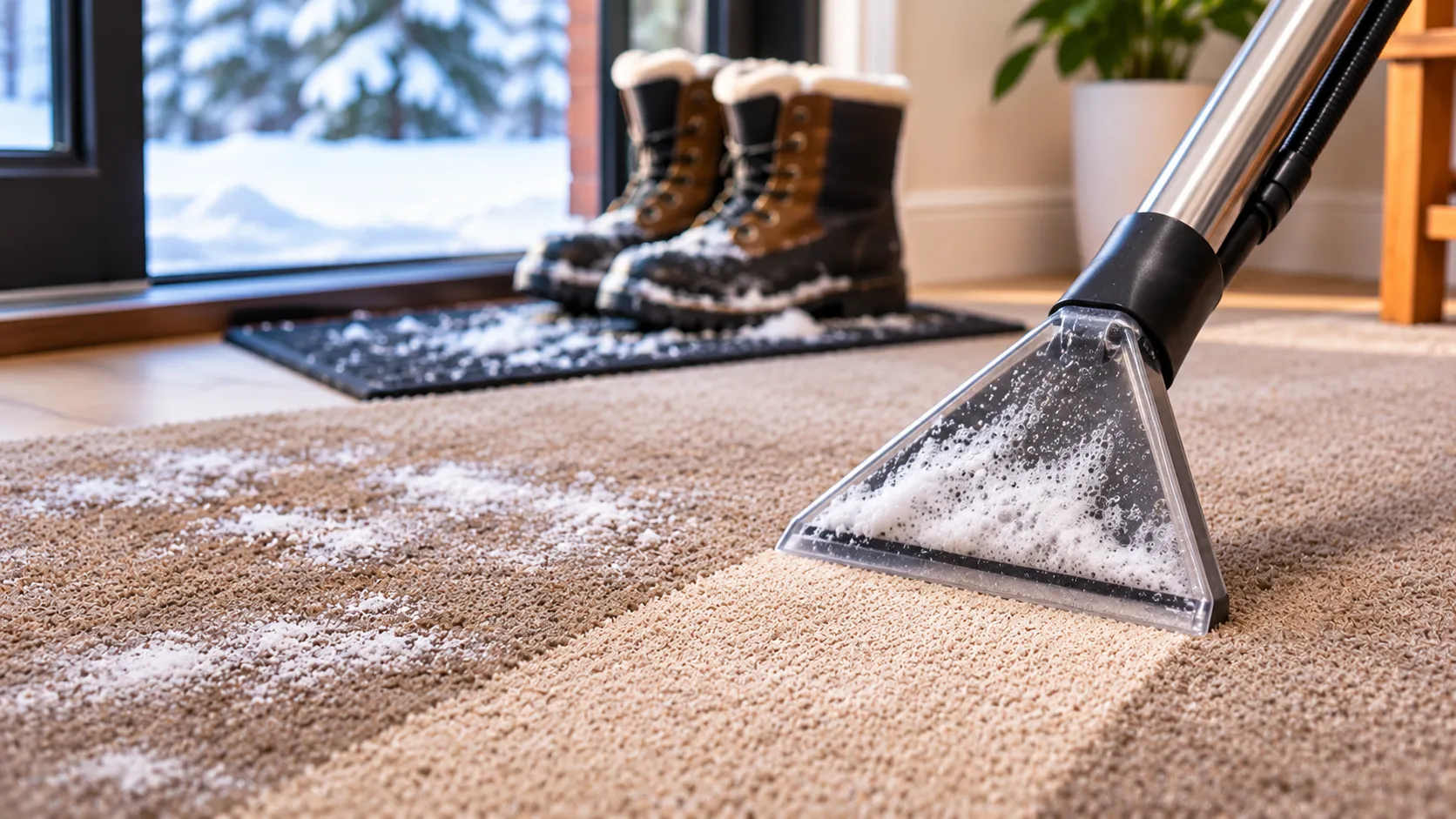
Winter in Edmonton brings plenty of challenges for homeowners, and keeping carpets clean is one of them. Snow-covered sidewalks, icy roads and road salt can make their way into your home every time someone walks through the door wearing winter footwear.
One common result is the appearance of white or cloudy marks on carpets, particularly around entrances, hallways and other high-traffic areas.
These marks are often caused by salt residue left behind as snow and moisture evaporate. Apart from affecting the appearance of your carpets, repeated exposure to outdoor dirt and salt can make everyday carpet maintenance more difficult.
The good news is that there are ways to deal with winter salt stains before they become a bigger cleaning problem.
In this guide, Maple Leaf Carpet Cleaning shares practical advice on identifying, treating and preventing salt residue on carpets during Edmonton’s winter season.
Why Does Winter Salt Leave Marks on Carpets?
Road salt is commonly used during Canadian winters to help manage icy roads and walkways. When people walk through treated areas, small amounts of salt can stick to their boots and shoes.
Once they enter a home, the salt mixes with melting snow and moisture and transfers onto carpet fibres.
As the water evaporates, salt deposits can remain behind, creating visible white or greyish marks.
You may notice these marks more frequently in:
- Entranceways and front door areas.
- Hallways connecting different rooms.
- Areas near shoe racks and coat storage.
- Carpeted stairs and frequently used walkways.
If the same areas receive regular foot traffic, salt residue and other outdoor debris can continue to accumulate throughout the winter.
How to Remove Winter Salt Stains from Carpets
If you notice white salt marks on your carpet, it is best to address them carefully. Using too much water or an unsuitable cleaning product can create additional problems.
Here are some steps to consider.
1. Remove Loose Dirt and Debris First
Before treating the affected area, remove any loose dirt, grit or dried debris.
If the carpet is completely dry, gently vacuum the area using a suitable vacuum cleaner. This helps remove loose particles without spreading them further into the carpet.
Avoid aggressive brushing or scrubbing, as this may damage the carpet fibres or push dirt deeper into the pile.
2. Check Your Carpet Cleaning Instructions
Not all carpets are made from the same materials. Wool, nylon, polyester and other carpet fibres can respond differently to cleaning products and moisture.
Before applying any cleaning solution, check the manufacturer’s care instructions.
If you are unsure about the carpet material or recommended cleaning method, seek professional advice before proceeding.
3. Use a Suitable Cleaning Solution Carefully
Some salt residues can be loosened with an appropriate carpet-safe cleaning solution.
However, it is important to choose a product suitable for your carpet type.
Before applying it:
- Read the product instructions carefully.
- Test it on a small, hidden section of the carpet.
- Use only the recommended amount.
- Avoid soaking the carpet.
- Follow the manufacturer’s recommended cleaning method.
Do not mix household cleaning products or apply strong chemicals without checking whether they are safe for your carpet.
4. Blot the Affected Area Instead of Scrubbing
When treating a salt mark, use a clean, light-coloured cloth to gently blot the affected area if the cleaning method allows it.
Avoid rubbing the carpet aggressively. Scrubbing can spread the residue and affect the appearance of the carpet fibres.
Work carefully and follow the cleaning product’s instructions. If residue remains, avoid repeatedly applying more solution.
5. Allow the Carpet to Dry Properly
After cleaning, proper drying is important.
Excess moisture left inside carpet fibres or the underlying layers can contribute to unpleasant odours and other moisture-related problems.
Where appropriate:
- Improve air circulation in the room.
- Keep the cleaned area clear while drying.
- Avoid walking over the damp section.
- Follow the carpet manufacturer’s drying recommendations.
If the carpet remains damp or develops a persistent smell, consider getting professional assistance.
Common Mistakes to Avoid When Cleaning Salt Stains
Trying to remove winter salt marks without understanding the carpet material can sometimes make the situation worse.
Here are a few mistakes to avoid.
Scrubbing too hard: Aggressive rubbing can damage fibres and spread residue across a larger area.
Using too much water: Excessive moisture can penetrate deeper into the carpet and make drying more difficult.
Applying unsuitable cleaning products: Some products can cause colour changes, residue or fibre damage.
Ignoring repeated salt buildup: Leaving visible marks untreated throughout the season can make regular maintenance more difficult.
Using coloured cloths: Certain fabrics may transfer colour onto light-coloured carpets. Use a clean, colourfast white cloth where appropriate.
How to Prevent Salt Stains on Your Carpets During Winter
Preventing salt residue from entering your home is often easier than repeatedly cleaning affected areas.
A few simple habits can make a noticeable difference.
Use Entrance Mats
Place durable mats outside and absorbent mats inside your main entrances. These help collect snow, moisture and dirt before they reach carpeted areas.
Clean the mats regularly so they do not become another source of dirt.
Remove Winter Footwear at the Door
Encourage family members and guests to remove boots and shoes before walking across carpeted areas.
Keep a shoe rack or tray near the entrance to make this routine convenient.
Keep High-Traffic Areas Clean
Entranceways and hallways receive more winter foot traffic than many other parts of the home.
Vacuum these areas regularly and address visible dirt or salt residue as soon as possible.
Deal With Wet Snow Promptly
If melting snow reaches your carpet, gently blot excess moisture rather than rubbing it into the fibres.
Allow the area to dry properly and avoid covering damp carpet with furniture or rugs.
When Should You Consider Professional Carpet Cleaning?
Everyday maintenance can help remove loose dirt and manage small spills, but it may not be enough when salt residue and outdoor debris have accumulated over time.
Professional carpet cleaning may be worth considering when:
- White salt marks continue to appear after routine cleaning.
- High-traffic areas look noticeably dull or dirty.
- You notice persistent odours.
- Your carpets have accumulated months of winter dirt.
- You are unsure which cleaning products are suitable for your carpet.
At Maple Leaf Carpet Cleaning, we provide professional residential and commercial carpet cleaning services in Edmonton and surrounding areas.
Whether your carpets need attention after a busy winter or you simply want to refresh your living space, our team can help you maintain cleaner and fresher-looking carpets.
The appropriate cleaning approach depends on the carpet material, condition and type of residue present.
Frequently Asked Questions
Why are there white marks on my carpet during winter?
White marks are often caused by road salt residue transferred indoors on winter footwear. As melting snow and moisture evaporate, salt deposits can remain visible on carpet fibres.
Can I remove salt stains from my carpet myself?
Some minor salt residues may be treated using suitable carpet-safe cleaning products. Always check the manufacturer’s instructions and test products in an inconspicuous area before use.
Does vacuuming remove winter salt stains?
Vacuuming can remove loose dirt and debris, but it generally will not remove salt deposits that have adhered to carpet fibres. A suitable cleaning method may be required.
Can road salt damage carpets?
Repeated salt buildup and associated outdoor debris can affect carpet appearance and make maintenance more difficult. Using entrance mats, removing footwear and cleaning residue promptly can help protect your carpets.
How can I stop salt from getting onto my carpets?
Use outdoor and indoor entrance mats, remove winter footwear at the door, and keep high-traffic areas clean. These habits help reduce the amount of salt and dirt entering your home.
Should I get professional carpet cleaning during winter?
Professional carpet cleaning can be useful when carpets have accumulated visible salt residue, dirt or stubborn marks that everyday maintenance cannot address.
Keep Winter Salt Stains Under Control with Maple Leaf Carpet Cleaning
Winter salt stains are a common challenge for Edmonton homeowners, but they do not have to become a permanent part of your carpets.
By keeping entrance areas clean, removing winter footwear, vacuuming regularly and treating salt residue carefully, you can help maintain your carpets throughout the colder months.
When everyday cleaning is no longer enough, professional carpet cleaning can help refresh your floors and address accumulated dirt.
Need help getting your carpets ready for a fresh start?
Contact Maple Leaf Carpet Cleaning today to enquire about professional carpet cleaning in Edmonton and surrounding areas.
Phone: +1 (780) 906-5237
Website: https://mapleleafcarpetcleaning.ca/
Maple Leaf Carpet Cleaning – Professional carpet cleaning for homes and businesses in Edmonton and surrounding areas.


